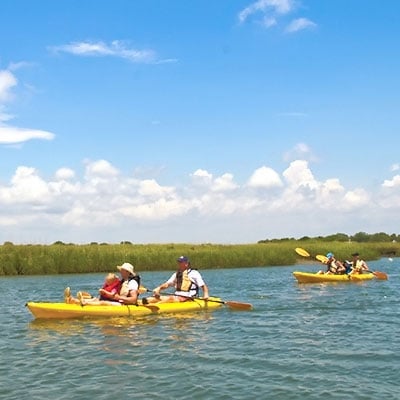
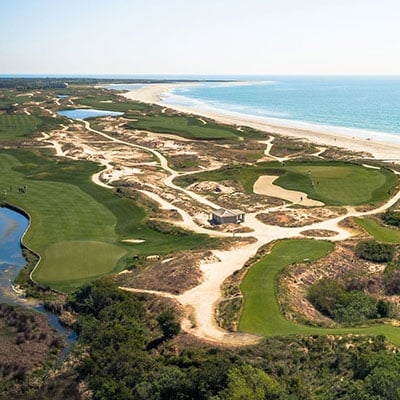
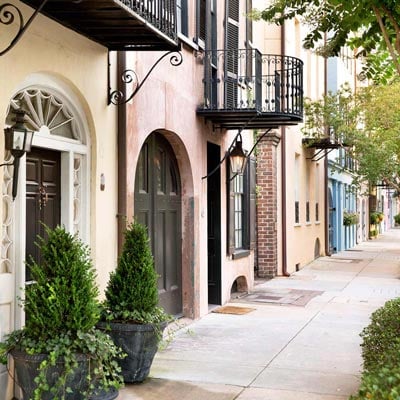
You may want to consider bringing extra film.
Stand on the site of the first shot in the Civil War. Come face to face with a giant sea turtle. Take a tour of an antebellum mansion. Climb aboard a WWII aircraft carrier. There are so many blossoming gardens, so many photo opportunities and so many reasons to come back to see us again.
What to See & Do > Attractions
Featured Offers
|
|
|
The Fire Museum, located adjacent to Tanger Outlet Mall, is home to the largest collection of fully restored American LaFrance fire trucks and antique fire equipment in the country, is a wonderful museum for the firefighter in all of us.
With more to explore every day, share in the wonders of South Carolina’s backyard. Marvel at turtles, stingrays, sharks, otters, jellyfish, alligators and more. Daily dive shows and interactive programs. Coming Spring 2012, travel through the new Madagascar Journey exhibit featuring ring-tailed lemurs.
At Patriots Point Naval and Maritime Museum, tour the USS Yorktown, USS Clamagore, Medal of Honor Museum, Cold War Submarine Memorial and the only Vietnam Support Base Camp in the U.S. It’s history you can touch.
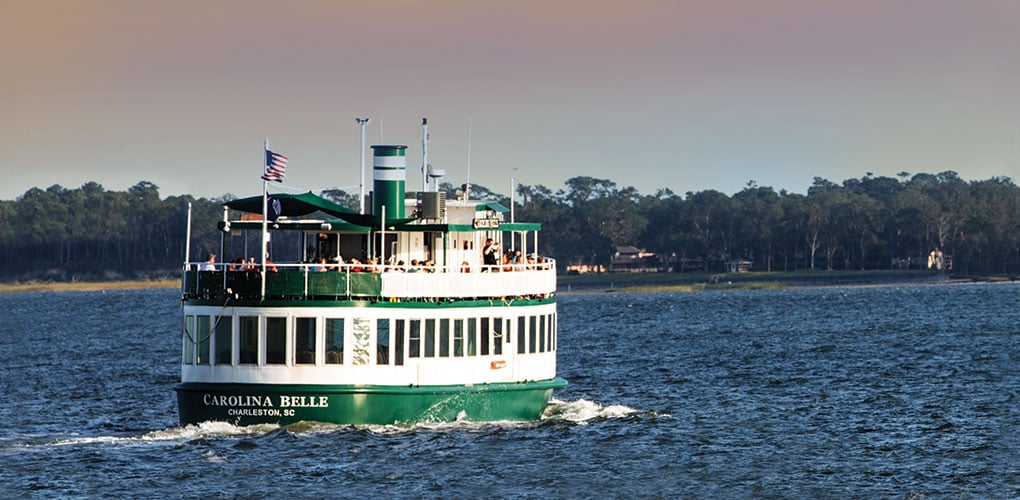
Stops at Fort Sumter National Monument, where the Civil War began. Cruise to the island fort while you enjoy breathtaking views of Charleston and her Harbor. Depart from the Visitor Education Facility at Liberty Square downtown and from Patriots Point in Mt. Pleasant.
Open 365 days a year 8am-5:30pm; call for Nov.-Feb. hours. This 17th century estate, acquired in 1676 by the Drayton family, features America’s oldest gardens (c.1680), which bloom year-round. Pre-Revolutionary War plantation house, Biblical garden, antebellum cabin, nature train/boat. Leashed pets welcome. $15, guided tours (House tour, train tour and Boat tour additional.)
“A must see!” – NBC Daytime Television. Boone Hall reflects Southern heritage spanning 300 years on one magnificent “still working” plantation. House tours, gardens, slave cabins, plantation coach tours, live performances in season, cafe, plus one of the world’s longest oak-lined avenues.
Lost at sea for over a century, the H.L. Hunley was the world's first successful combat submarine. Raised in 2000, scientists are at work to conserve the Hunley. Public tours are available on weekends only.
A carefully preserved 18th century plantation, National Historic Landmark and home of America's oldest landscaped Gardens. The House Museum highlights family collections and the Middletons' role in American history. Costumed interpreters demonstrate the skills once performed by enslaved Africans.
Located on Charleston's High Battery, the house affords a glimpse of early 19th century elegance, style and comfort. Built in 1825, it contains Alston family furniture, silver, books and paintings. Three piazzas offer incredible views of the Charleston Harbor.
M-Sa 10am-5pm; Su 1-5pm (last tour 4:30pm). “Charleston’s Huguenot House” was built in 1803. The Garden Gate Temple and outstanding collection of American, English and French furnishings of the period capture the lifestyle of a wealthy, rice-planting family. Adults $10; children $5. Combination tickets available.
The city’s most intact antebellum urban complex (c. 1820). Historic interiors, surviving virtually unaltered since 1858, have been conserved and stabilized. Many family objects are still found in the rooms for which they were purchased. M-Sa 10am-5pm; Su 2-5pm. $10.
America’s first museum showcases a variety of fascinating artifacts that tell the story of Lowcountry cultural and natural history. Whether you have an interest in early Southern furniture, historic textiles or the Civil War, the Charleston Museum has something for everyone in your family.
Grand Federal townhouse completed in 1808. Restored interior w/ elaborate ornamentation and a magnificent free-flying staircase. Set amid spacious gardens and furnished with period antiques, the house evokes the gracious lifestyle of the city's elite. M-Sa 10am-5pm; Su 2-5pm. $10.
The House Museum (1755) interprets generations of the Middleton family through an extraordinary collection of portraits, furniture, silver, china and documents. Guided tours introduce the people who made Middleton Place their home and the slaves and freedmen who served them.
The oldest unrestored plantation house in America still open to the public. Admission includes guided House Tour, Connections Program: From Africa to America, interactive landscape tour, African-American cemetery, nature walks, Museum Shop. Please call ahead for hours and tour times.
M-Sa 10am-5pm; Su 1-5pm (last tour 4:30pm). Built in 1772, “Charleston’s Revolutionary War House” was the town-home of Thomas Heyward, Jr. Features magnificent Charleston-made furniture and a formal 18th century garden. Adults $10; children $5. Combination tickets available.
Experience Charleston’s history through art! Come face to face with stories of the South Carolina Lowcountry as seen through painting, miniature portraiture, sculpture, photographs, and more. Complimentary cell phone tour (using your own phone) with paid admission. Tues-Sat 10am-5, Sunday 1-5.
Angel Oak
Open daily 9am - 5pm. Owned and operated by the City of Charleston Department of Parks. The Angel Oak is a Live Oak tree, estimated to be 1,400 years old. Live oaks are not particularly tall, but have wide spreading canopies. Only in the very oldest of specimens do you find massive limbs resting on the ground, as do the limbs of the Angel Oak. It stands 65ft. high and provides a 17,000 square foot area of shade. No admission charge.
Audubon Center at Francis Beidler Forest
The 15,000-acre sanctuary for plant and animal life is located in Four Holes Swamp and contains the largest remaining virgin stand of bald cypress and tupelo trees in the world. A mile-and-3 quarters boardwalk begins at the Visitor's Center and sweeps past portions of majestic swamp, where ancient trees, migrating birds, and colorful wildflowers can be quietly oberserved. 35 miles NW of Charleston, Exit 187-SC 187 off I-26. Open 9:00 am-5:00 pm, Tues.-Sun. Closed Mondays, Thanksgiving, Christmas Eve, Christmas, New Year's Eve, and New Year's Day. Adults/$8.00, 6-18 years/$4.00, Children under 6/free. Audubon members/$7.
Avery Research Center for African-American History and Culture
Reading room and archives open 10am-5pm M-F and 12-5pm Sa. Walk-in tours open M-Sa 12-5pm. Group tours by appointment. (1990 Carolopolis Award). Beautifully restored facility, site of former Avery School built in 1865. Tour of building includes exhibits and archives.
Battery Park/Whitepoint Gardens
The Battery, which includes a park known as White Point Gardens, is a landmark promenade in Charleston. Stretching along the shores of the Charleston peninsula and bordered by the Ashley and Cooper Rivers. Fort Sumter is visible from the Cooper River side and the point, as is Castle Pinckney, the World War II aircraft carrier USS Yorktown, Fort Moultrie, and Sullivan's Island.
Cathedral of St. John The Baptist
Built between 1890 and 1907, the building is constructed of Connecticut Brownstone with star shaped indentations on the surface. The land was purchased in 1820 by Bishop England who was the 1st bishop of the diocese.
Charles Pinckney National Historic Site
Daily 9:00am to 5:00pm, closed New Year’s, Thanksgiving and Christmas Day. Free admission. The National Park Service preserves a remnant of Founding Father Charles Pinckney’s plantation, Snee Farm. An 1828 Lowcountry cottage serves as museum and visitor center. 20-minute film & ½ mile trail.
Charles Towne Landing State Historic Site
Begin your Charleston experience where English settlers established the first permanent European colony in Carolina. This 664-acre historic treasure boasts a replica 17th-century tall ship, functional cannons, a zoo, and an award-winning museum! An exceptional experience at an affordable price.
Charles Towne Landing State Historic Site
Open daily 9am-5pm. Visitor Center, museum, gift shop and history trail, 17th century trade ship replica Adventure, native animal zoo, informal gardens, exhibits and more. Learn about and experience South Carolinas original settlement.
Charleston Tea Plantation
Visit Charleston Tea Plantation for a fun and educational one-of-a-kind experience. See and hear how tea is grown and made into the world's 2nd most consumed beverage. Free factory tour--great Shoppe--spectacular views and all the tea you'd like to drink!
Children's Museum of the Lowcountry
Explore nine hands-on, interactive exhibits that combine playing and learning! Climb to the top of our Medieval Castle, take the helm of a Lowcountry Pirate Ship or create a masterpiece in our Art Center. Tuesday-Saturday 9-5pm, Sunday 1-5pm. $7 admission.
Circular Congregation Church
Open to visitors when tour guides are available. Organized in 1681, this church became The Independent Church of Charles Towne. Meeting Street adopted its name from the Meeting House built to house the independent congregation. In 1806, a unique circular building, designed by Robert Mills, became known as the Circular Church. In 1861, a fire destroyed the building. In 1891, the fourth and present building on the site integrated the brick from the burned building of the 1886 earthquake into the new building. The Circular Church established the first Sunday School in South Carolina.
Colonial Dorchester State Historic Site
Su-M 9am-6pm. Dorchester was settled in 1696 by a small group of Congregationalists on a high bluff on the east bank of the Ashley River. Today, the ruins of Fort Dorchester, old St. George’s Church, and interesting archaeological excavations mark the site if Dorchester.
Drayton Hall
The oldest unrestored plantation house in America still open to the public. Admission includes guided House Tour, Connections Program: From Africa to America, interactive landscape tour, African-American cemetery, nature walks, Museum Shop. Please call ahead for hours and tour times.
Edisto Island Museum
T-F 1-4pm. Exhibits on sea island plantation life, the Civil War and native Americans. Adults $3; Students $2; 10 and under are free.
Firefly Distillery
South Carolina's first and largest distillery. Firefly Distillery is home to Firefly Sweet Tea Vodka, the original sweet tea vodka, and many more southern specialties. Guests are welcome Wed-Sat 11am-5pm for tastings, closed January. Come taste the South!
First (Scots) Presbyterian Church
This church was organized in 1731 by Caledonian immigrants who would not become members of the Anglican faith. The present church, built in 1814, displays the seal of the Church of Scotland in the window over the main entrance. The bells, which the congregation voted to give to the Confederacy in 1863, were replaced in 1999.
First Baptist Church
Located in the historic district near the Battery; Sunday services, 8:45am worship, 9:45am Bible school, 11am worship and 6:30pm vesper service. First Baptist Church is the oldest Baptist Church in the South, founded in 1682. The present sanctuary building, designed by Robert Mills, was completed in 1822.
Folly Beach Fishing Pier
The Edwin S. Taylor Folly Beach Fishing Pier stretches 1,045 feet into the Atlantic Ocean. The second longest on the east coast, the pier offers not only great saltwater fishing and spectacular views, but also tournaments, special events, and dining.
Fort Moultrie
The Visitor Center is open daily from 9:00am to 5:00pm, closed New Year’s Day, Thanksgiving Day and Christmas Day. The first decisive patriot victory over the British Navy on June 28, 1776 at a palmetto log fort on the shores of Charleston Harbor galvanized the patriot’s cause for independence. The National Park Service interprets 171 years of American seacoast defenses from 1776 to 1947. The Visitor Center houses exhibits on Fort Moultrie’s history and a 20-minute orientation film. Adults $3; Seniors (62+) $1; Children (16 and under) free; Families $5.
Fort Sumter National Monument
Open daily except New Year’s Day, Thanksgiving Day and Christmas Day. Hours vary according to the season. Concessionaire ferries depart from Liberty Square in Charleston and from Patriots Point in Mt. Pleasant. America’s most tragic conflict ignited at Fort Sumter on April 12, 1861, when a chain reaction of social, economic and political events exploded into civil war. A powerful symbol to both the South and the North, Fort Sumter remains a memorial to all who fought to hold it. The fort may be visited by private boat or by ferry boat. Correspondences should be sent to park headquarters at 1214 Middle St., Sullivan’s Island, SC 29482.
Fort Sumter Visitor Education Center at Liberty Square
The Visitor Center is open daily from 8:30am to 5:00pm, and admission is free. Closed New Year’s Day, Thanksgiving Day, and Christmas Day. This state-of-the-art facility is the primary departure point for visitors to Fort Sumter, serving as an interpretive education center for the National Park Service to communicate the significance of Fort Sumter and its history. Exhibits provide an overview of events leading up to the Civil War.
Francis Marion National Forest
A 250-thousand-acre forest located in the Coastal Plains north of Charleston. The forest offers wide variety of recreation activities including picnicking & camping sites, boat ramps, fishing ponds, rifle ranges, hiking, horse & motorcycle trails. For more information write: District Ranger, Witherbee Ranger District, HCR 69, Box 1532, Moncks Corner, SC 29461 or write: District Ranger, Wambaw Ranger District, PO Box 106, McClellanville, SC 29458.
Hampton Park
A historic park with camellias and azaleas in bloom in spring, roses bloom in the summer; 1-mile nature trail; Charleston's mounted horse patrol stables nearby.
Hampton Plantation State Historic Site
Grounds open daily from 9am-6pm. Tours available of the 18th century mansion Saturday through Tuesday at 1, 2 and 3pm. If you are driving between Charleston and Myrtle Beach, stop and see a picturesque plantation containing former rice fields, gardens, mansion, kitchen house, picnic area, graveyards and hiking trails. Call 843.546.9361 for further details.
Historic Charleston Battery
No trip to Charleston is complete without a stop at White Point Gardens, known popularly as Battery Park. This peaceful park offers unprecedented views of Charleston Harbor and Fort Sumter, while a look back across the street promises fantastic images of beautiful Charleston mansions. Enormous oak trees provide serene shade to the park, and a display of weapons and cannons used in the Civil War make for a unique play area for children. You'll see a Columbiad used to shell Fort Sumter in 1861, two seacoast mortars, and more - be sure to bring a camera to snap photos of your family clamoring and playing on the cannons! During the early 18th century, the park was used as the home of the gallows, where Stede Bonnet - the "gentleman pirate" - and dozens of others were hanged. By 1837, the land was in use as a public garden. Weddings and other special events are frequently held at the beautiful, massive white gazebo in the center of the park, but on off-days it makes for a beautiful place to sit and take in the beauty and charm of Charleston!
Irvin-House Vineyards
Charleston’s only winery. Open Wednesday through Saturday 10am-5pm. Free tours available every Saturday at 2pm. Visitors can taste authentic wine, visit the vineyards and stroll through the property. Closed January.
Isle of Palms County Park
Isle of Palms County Park offers beautiful ocean frontage with lifeguards on duty seasonally along a beachfront designated swimming area. Enjoy other amenities including restrooms, showers, picnic area, and chair and umbrella rentals. Dogs must be leashed at all times.
James Island County Park
A short drive from downtown Charleston, this 643-acre park offers exceptional recreation and natural beauty. Features: open meadows, saltwater fishing/crabbing, seasonal fountain play area, miles of trails, picnic spots with and grills, dog park, sand volleyball court, horseshoe pits.
Kahal Kadosh Beth Elohim (KKBE)
Reform Jewish Congregation of Charleston Open for tours when volunteer guides available M-F 10am-Noon and 1:30-3:30pm except on F. Su:1-4pm. Judaic gift shop and museum open 10am-4pm. Normal services Friday at 8pm (7pm on 1st F of month) and Saturday at 10:00am. This is the fourth oldest synagogue in the United States and the oldest in continuous use. It was the birthplace of American Reform Judaism in 1824. A handsome, synagogue built in 1794, was destroyed by fire in 1838. The present structure, constructed in 1830, is considered one of the country’s finest examples of Greek Revival architecture.
Karpeles Manuscript Museum
W-Sa 11am-4pm. Houses the largest private collection of historically significant manuscripts in the world (more than 1 million). Philanthropist David Karpeles supports seven museums across the nation and his collection ranges from Ancient Egypt to the Apollo moon landing. Free.
Kiawah Beachwalker Park
Located on beautiful Kiawah Island, Beachwalker Park offers the island’s only public beach access, including ocean frontage and a river view. Lifeguards on duty seasonally. Dogs must be leashed at all times. Operating hours vary seasonally; visit www.ccprc.com.
Magnolia Cemetery
The oldest cemetery in Charleston, founded in 1849 on the banks of the Cooper River, is inhabited by generations of southern leaders. On the National Register of Historic Places. Visitors are welcome. 8:00 am-5:00 pm. Free.
Mepkin Abbey and Gardens
Guided tours – 11:30am and 3pm Tu – Sat. & 3pm on Sun. Since 1949 Catholic Trappist monks have lived and worked on this 3,000 acre 18th century Cooper River rice plantation. Visitors tour a working monastery and adjacent gardens and shop.
Morris Island Lighthouse
Morris Island is located off of Folly Beach and is an ecologically and historically sensitive barrier island. One of Charleston's best known and most beloved landmarks is recognized as one of the top 100 cultural sites in the state of South Carolina by the Heritage Trust Program Board. www.savethelight.org.
Mother Emanuel A.M.E. Church
In 1791, the Free African Society, composed of both slaves and free Negroes, was formed in Charleston and later became known as the Bethel Circuit. In 1865, the church was reorganized and the present edifice was erected in 1891.
Mount Pleasant Memorial Waterfront Park
Located at the foot of the Ravenel bridge, featuring a new visitor center/reception facility, Sweetgrass Cultural Arts Pavilion, a war memorial and state-of-the-art playground. Adjacent to the Mount Pleasant Pier.
Mount Pleasant Pier
Part of the Memorial Waterfront Park complex, the Mount Pleasant Pier stretches into scenic Charleston Harbor under the Ravenel Bridge. Features: covered pavilion for special events, swings, picnic tables, fishing tackle sales, rod rentals, River Watch Cafe & Gift Shop.
Mt. Zion A.M.E. Church
Service at 10am on Sun. This is the first brick church building owned by Blacks in Charleston. The building was purchased in 1882 by members of Emanuel A.M.E. Church to alleviate its overcrowded conditions. The 54th & 55th Massachusetts regiments worshiped here while stationed in Charleston.
Museum Mile
This diverse mile long corridor stretches along Meeting Street from the Charleston Visitor Center to the Nathaniel Russell House. Offering visitors the most comprehensive array of historical and cultural attractions in downtown Charleston.
North Charleston Riverfront Park
Set on the banks of the Cooper River, the park boasts a performance pavilion, expansive lawn, and picnic shelter, as well as 10 acres of walking paths, playground, fishing pier, boardwalk, dog park, and play fountain. Hosts Greater Charleston Naval Base Memorial and annual National Outdoor Sculpture Exhibition. Free parking/admission.
North Charleston Wannamaker County Park
Wannamaker County Park features over 1,015 acres of beautiful woodlands and wetlands. Other features: paved trails, picnic sites with grills, two playgrounds, open meadows, dog park, play hill, seasonal sprinkler play area, sand volleyball court, horseshoe pits, special events, concerts.
Old City Market
Open M-Su. one of the nation's oldest public markets (circa 1804), this beloved attraction completed a three-year, $5.5 million renovation in June 2011. Shop for authentic Lowcountry souvenirs and hear the lilting dialect of Gullah ladies as the weave and sell handmade sweetgrass baskets.
Old City Market
Open M-Su. one of the nation's oldest public markets (circa 1804), this beloved attraction completed a three-year, $5.5 million renovation in June 2011. Shop for authentic Lowcountry souvenirs and hear the lilting dialect of Gullah ladies as the weave and sell handmade sweetgrass baskets.
Old Exchange and Provost Dungeon
Built by the British in 1771, American Patriots were held prisoner in the Provost during the War of Americas' Independence. One of the three most historically significant buildings of colonial America. Educational tours/evening events. Adults $7; 7-12 $3.50; under 6 free.
Old Santee Canal Park
Old Santee Canal is a 195 acre park located on the first true canal in America. The park's boardwalks and trails wander through Biggin Creek leading to the last one mile section of the old canal. Visitors can canoe or hike through the park and see an abundance of nature.
Old Slave Mart Museum
Recounting the story of Charleston's role in this inter-state slave trade by focusing on the history of this particular building and site and the slave sales that occurred here. Hours are 9 to 5 M-Saturday. Closed on Thanksgiving, Christmas and New Year's Days. $7.00 for adults, $5.00 for children aged 6 to 12, and 5 and under are free of charge.
Palmetto Islands County Park
This tropical 943-acre park features bicycle paths, boardwalks, and picnic sites with grills. Other features: Nature Island, 50-foot observation tower, open meadow, tidal creek fishing and crabbing dock, state-of-the-art playground, kayak launch, dog park, sand volleyball court, horseshoe pits.
Patriots Point Naval & Maritime Museum
At Patriots Point Naval and Maritime Museum, tour the USS Yorktown, USS Clamagore, Medal of Honor Museum, Cold War Submarine Memorial and the only Vietnam Support Base Camp in the U.S. It’s history you can touch.
Philip Simmons Foundation, Inc.
Established in 1991 by the Vestry of St. John's Reformed Episcopal Church to develop and maintain a commemorative garden and preserve the legacy of the master craftsman. The Bell Garden (George Street) and the Heart Garden (topiary garden), entrance from Menotti Street.
Postal Museum
(located inside the old post office). Charleston’s postal history. The Post Office Building circa 1896 was erected over the ruins of the old police station, which was destroyed in the earthquake of 1886. The building at Meeting and Broad is the oldest continuously operated post office in the Carolinas.
Ravenel Caw Caw Interpretive Center
Rich in natural and historical resources, Caw Caw features: 6+ miles of trails, elevated wetland boardwalks, educational programs, 18th - 19th century rice fields, naturalized tea plants, Stono Rebellion site, wildlife including waterfowl, songbirds, otters, deer. Dogs, bicycles not permitted.
Shem Creek Park
Shem Creek Park in Mount Pleasant is located off Coleman Boulevard in close proximity to the Charleston Harbor. A float dock is available for mooring day trippers, or board a water taxi. Take a leisurely stroll or welcome the shrimp Trawlers along the long boardwalk.
South Carolina Historical Society
M, W, Th, F 9am – 4pm; Tu 9am – 7:30pm. Founded in 1855. The state's oldest historical society maintaining a vast research library and archives in the historic Robert Mills Fireproof Building. Researchers are invited to explore our collections. Members conduct research for free and receive the Society's publications. Tours available by appointment.
St. Andrew’s Episcopal Church
Sunday service times are 9:00am and 10:45am. Contemporary Wednesday service at 6:30pm. Founded in 1835 as The Chapel of Ease for Christ Episcopal Church, St. Andrew’s is located in Mt. Pleasant’s historic Old Village. After the War Between the States, St. Andrew’s reopened in February, 1866 and was the only place of public worship then open, creating a place of worship for parishioners of many denominations.
St. John's Lutheran Church
St. John’s is the mother church of Lutherans in South Carolina and celebrated its 250th anniversary in 1992. Founded by German immigrants, the first recorded service was held May 26, 1734. The congregation was established in 1742 by Henry Melchior Muhlenburg. The first building on the site was begun in 1759 and replaced by the present building in 1817. Handicapped accessible on Sunday, weekdays by request.
St. Mary's Roman Catholic Church
The oldest Roman Catholic Church in South Carolina and the Mother Church of the Dioceses of South Carolina, North Carolina, and Georgia, it was established in 1789. The present building, replacing an earlier one which was destroyed by fire in 1838, was completed in 1839.
St. Matthew's Lutheran Church
Mon.-Fri. 8:30am-4:30pm. The second Lutheran congregation organized in Charleston in 1840, primarily for German-speaking settlers. The present Gothic building, with its 297-ft. steeple, was erected in 1872 and was rebuilt following a devastating fire in 1965. Spectacular stained glass windows tell Biblical stories.
St. Michael's Episcopal Church
Completed in 1761, this is the oldest church edifice in the city and one of the few city churches in America to retain its original design. It was here that George Washington worshiped during his tour of the South in 1791. The clock and ring of eight bells in St. Michael’s steeple were imported in 1764. Except for short absences (during the Revolution they were returned to England as a prize of war, and during the Civil War they were burned and had to be sent to England for recasting), these bells have shared the lives of Charlestonians for more than 200 years.
St. Philip’s Episcopal Church
Est. 1670, St. Philip’s is the Mother Church of the Province, and originally stood on the site where St. Michael’s stands today. The second structure at the present site was completed in 1724 but destroyed by fire in 1835. The present building was constructed 1835-1838. During the Civil War its bells were converted into cannon. On July 4, 1976, new bells were placed in the steeple, and again St. Philip’s was known as the lighthouse. In St. Philip’s churchyard are the graves of John C. Calhoun, Secretary of War and Vice President of the United States; Edward Rutledge, signer of the Declaration of Independence; Charles Pinckney, signer of the Constitution; and Dubose Heyward, author of “Porgy.”
Summerville Dorchester Museum
100 East Doty Ave., Summerville, SC 29483; 843-875-9666. Th-Sa 10am-2pm. Other hours by appointment.
The Cathedral of St. Luke and St. Paul
Opened in 1815, it was known in its early years as the “Third Episcopal Church of Charleston” and the “Planters Church” as its founding families were primarily from outlying plantations. The Cathedral’s design is typical of the period, and the interior has been restored to appear much as it did in 1815. Listed on the National Register of Historic Places, it is one of the two oldest church buildings currently serving as an Episcopal / Anglican Cathedral in the United States. The Cathedral is the site of major cultural events, including concerts during the Spoleto and Piccolo Spoleto festivals.
The Center for Birds of Prey
Power. Beauty. Elegance in Flight. Encounter raptors from around the world during guided walking tours, awe-inspiring flight demonstrations, and natural history discussions. Experience owls, hawks, eagles, falcons. One of the most unique and natural places to visit in Charleston.
The Charleston Library Society
M-F 9:30am-5:30pm; Sa 9:30am-2pm. Established December 28, 1748 by seventeen young gentlemen of various trades. The Charleston Library Society paved the way for the founding of the College of Charleston in 1770 and provided the core collection of artifacts for the founding of the Charleston Museum.
The Citadel Museum
Su-F 2-5pm; Sa 12-5pm. Closed College, religious, and military holidays. Museum portrays the history of The Military College of South Carolina and Corps of Cadets from 1842 to present. Exhibits feature photographs, uniforms and archival documents. Dress Parade held at 3:45pm almost every Friday during the academic year. Also visit Summerall Chapel. Free.
The City Hall Gallery
M-F 9am-5pm. Located in the Council Chamber of the Charleston City Hall (1801), the gallery contains portraits of many important leaders, including one of George Washington by John Trumbull.
The College of Charleston
Founded in 1770, the first municipal college in America was built in 1724 on land set aside for educational purposes. The present main building was designed by eminent Philadelphia architect William Strickland, built in 1828, and paid for by voluntary subscription by the people of Charleston.
The Confederate Museum
Market Hall was built in 1841. Since 1898, the Daughters of the Confederacy has operated the Confederate Museum, which contains flags, uniforms, swords and other Confederate memorabilia.
The French Protestant (Huguenot) Church
Services are held each Sunday at 10:30am. Built in 1844-45, the fourth church at this site was designed by Edward B. White. As early as 1687, French Huguenots, fleeing France to avoid religious persecution, were worshipping in a church on this site. An annual French Liturgy service is still held each spring.
The Historic Dock Street Theatre
“America’s First Theatre,” located in the heart of downtown Charleston, is home to the City’s finest cultural institutions including Spoleto Festival USA and Moja Arts Festival. Charleston Stage, the theatre company in residence at Dock Street, presents a full season of plays each year.
The Old Bethel Methodist Church
Formerly Bethel Methodist Church, this church was dedicated in 1798 to accommodate the expanding congregation of the Blue Meeting House on Cumberland Street. When the congregation of Bethel Methodist Church began construction of its present church in 1852, the earlier church was moved slightly to the west and used for class meetings of Black members. In 1880, it was moved across the street and given to the Black congregation.
The Old St. Andrews Parish Church
The oldest surviving church in the Carolinas, founded and built in 1706; a number of historic tombs are located in the church yard. The Annual Tea Room and Gift Shop each spring serves a Lowcountry menu.
The Powder Magazine
The oldest public building in the Carolinas. The Powder Magazine stored the powder crucial for defending Charleston. Although replaced by a newer magazine in 1748, it served effectively until the American Revolution. Today it is restored to its mid-nineteenth century appearance and open as a National Historic Landmark.
The Second Presbyterian Church
This building is the oldest edifice of this faith in the historic section of Charleston, built in 1809 by James and John Gordon and dedicated on April 3, 1811. The sanctuary was so immense that it was a strain on the ministers’ voices to be heard. In 1833, the floor was raised three feet, the ceiling lowered 16 feet, and part of the sanctuary cut off to make an enlarged vestibule. The entrances on the north and south sides were closed. The old box pews were replaced in 1849. The Presbyterian Church of the United States designated this church Historical Site Number One.
The Thomas Elfe House and Garden
M-F 10am-noon; afternoons & weekends by reservation. This pre-revolutionary War Georgian style house was home to Thomas Elfe, one of Charleston’s most acclaimed cabinetmakers. Largely in its original state, finely paneled rooms, authentic furnishings. HGTV and Early American Life Magazine features. Adults $8, children $4.
The Unitarian Church
The Unitarian Church was chartered originally as the Second Independent or Congregational Church and was an adjunct of the Circular Church on Meeting Street. In 1817, the Unitarian and Trinitarian Congregationalists divided, the Unitarians settling on Archdale Street. The building was begun in 1722, but work was interrupted by the Revolution, and it was not completed until 1787. In 1852, the congregation remodeled the building after plans by Francis D. Lee inspired by the Chapel of Henry VII in Westminster Abbey. The unusual fan tracery in the ceiling in the interior is unique in the United States.
Waterfront Park
This park is an eight-acre linear park and pier along the Charleston Harbor entry. The park masterfully combines spectacular fountains, spacious lawns, intimate garden "rooms," walking and jogging path and a long pier with picnic tables and wooden swings.