You may want to consider bringing extra film.
Stand on the site of the first shot in the Civil War. Come face to face with a giant sea turtle. Take a tour of an antebellum mansion. Climb aboard a WWII aircraft carrier. There are so many blossoming gardens, so many photo opportunities and so many reasons to come back to see us again.
Aiken-Rhett House
M-Sa 10am-5pm; Su 2-5pm. The expansive Aiken-Rhett House (c. 1818) stands as the city’s most intact urban villa. A conservation approach has been adopted for this important site, which has survived virtually unaltered since 1858. Many objects can still be found in the rooms for which they were purchased.
Avery Research Center for African-American History and Culture
Reading room and archives open 10am-5pm M-F and 12-5pmon Saturdays. Walk-in tours open Mon-Sat 12-5pm. Group tours by appointment. (1990 Carolopolis Award). Beautifully restored facility, site of former Avery School built in 1865. Research Center’s purpose is to document, preserve, and make public the unique historical and cultural heritage of South Carolina Lowcountry African-Americans. Tour of building includes exhibits and archives.
Drayton Hall
More than a house, activities include hourly tours and daily programs, a self-directed “Voices” Landscape Tour on DVD, self-guided River and Marsh Walks, A Sacred Place: The African-American Cemetery, and an artisan-inspired Museum Shop.
Edmondston-Alston House
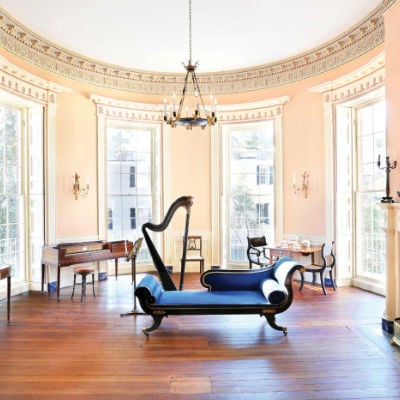
This beautiful home on Charleston’s High Battery affords a glimpse of early 19th century elegance, style and comfort. Built in 1825, the house contains Alston family furniture, silver, books and paintings. Three piazzas offer incredible views of Charleston Harbor. In 1861, General Beauregard watched the bombardment of Ft. Sumter here.
Heyward-Washington House
M-Sa 10am-5pm; Su 1-5pm (last tour 4:30pm). Built in 1772, “Charleston’s Revolutionary War House” was the town-home of Thomas Heyward, Jr., Revolutionary patriot and signer of the Declaration of Independence. Located in the original walled portion of the city, the house features magnificent Charleston-made furniture and a formal 18th century garden. Adults $10; children $5. Combination tickets available.
Joseph Manigault House
M-Sa 10am-5pm; Su 1-5pm (last tour 4:30pm). “Charleston’s Huguenot House” was built in 1803 and is a premier example of Adam-style, or Federal, architecture. The garden Gate Temple and outstanding collection of American, English and French furnishings of the period capture the lifestyle of a wealthy, rice-planting family. Adults $10; children $5. Combination tickets available.
Middleton Place House Museum
Surrounded by America’s oldest landscaped Gardens and the Plantation Stableyards, the House Museum displays 18th and 19th century Middleton family china, silver, furniture and portraits. Guided tours introduce visitors to the Middleton family and their very important role in American history.
Morris Island Lighthouse
Morris Island is located off of Folly Beach and is an ecologically and historically sensitive barrier island. One of Charleston's best known and most beloved landmarks is recognized as one of the top 100 cultural sites in the state of South Carolina by the Heritage Trust Program Board. www.savethelight.org.
Nathaniel Russell House
M-Sa 10am-5pm; Su 2-5pm. Visit the grand Federal townhouse of Charleston merchant Nathaniel Russell, completed in 1808. The graceful interior boasts elaborate ornamentation and a magnificent free-flying staircase. Set amid spacious gardens and furnished with period antiques, the house evokes the gracious lifestyle of the city's elite.
Old Exchange and Provost Dungeon
Built by the British as the Exchange and Customs House in 1771, American Patriots were held prisoner here during the Revolutionary War, playing a huge role in American history; and is one of the three most historically significant buildings of colonial America.
The College of Charleston
Founded in 1770, the first municipal college in America was built in 1724 on land set aside for educational purposes. The present main building was designed by eminent Philadelphia architect William Strickland, built in 1828, and paid for by voluntary subscription by the people of Charleston.
The Powder Magazine
The oldest public building in the Carolinas. The Powder Magazine stored the powder crucial for defending Charleston. Although replaced by a newer magazine in 1748, it served effectively until the American Revolution. Today it is restored to its mid-nineteenth century appearance and open as a National Historic Landmark.
The Thomas Elfe House and Garden
This pre-revolutionary War Georgian style single house was the home of Thomas Elfe, Charleston’s most famous cabinetmaker. An extraordinary collection of 18th and 19th century antiques and an award winning “period” kitchen make this private residence a “must see”. M-F 10am-noon; afternoons and weekends by reservation. Adults $8, Children $4.